

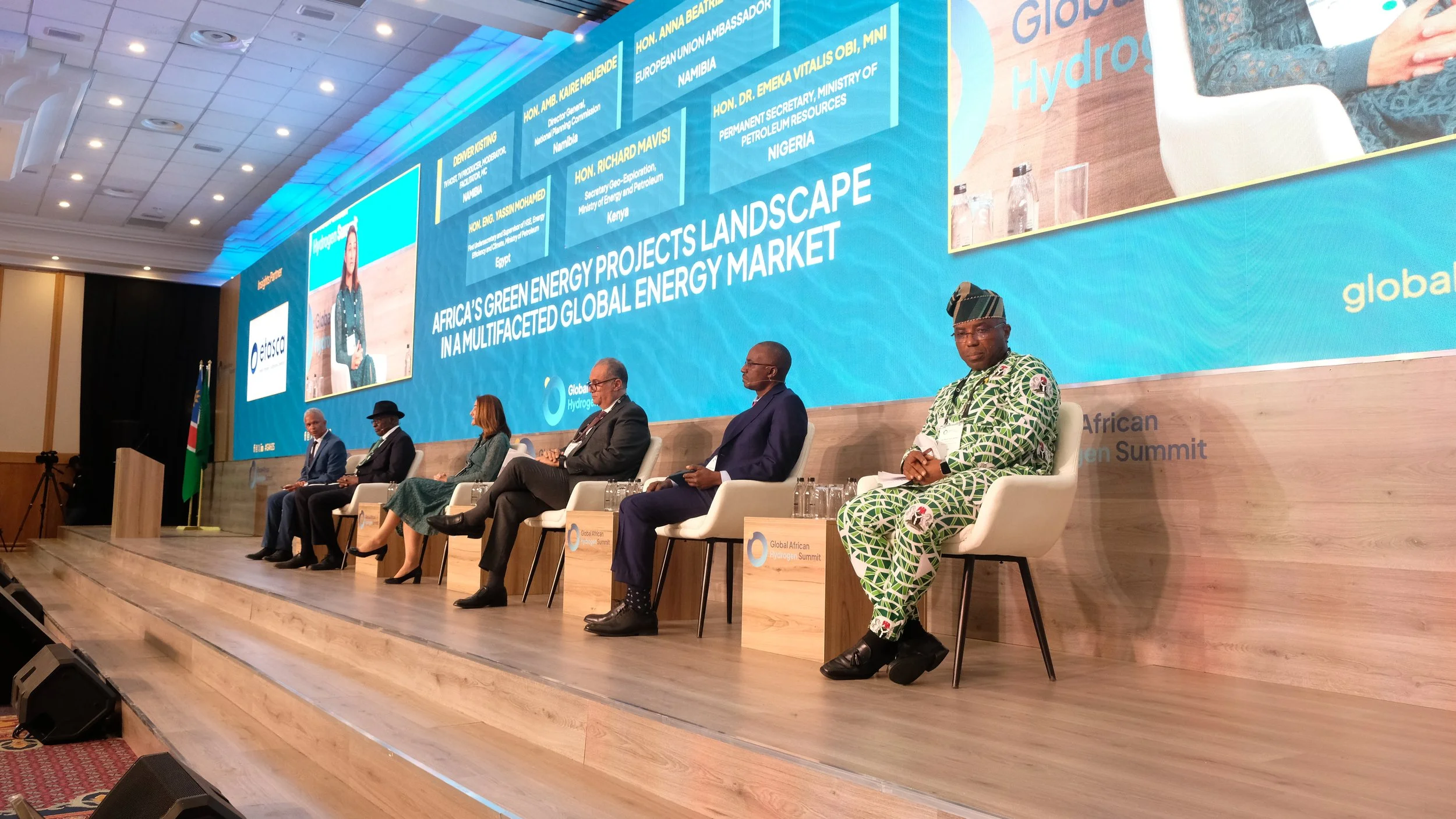
Programme
Our Partners








Day 1:
Wednesday, 9 September 2026
-
Topic: "Africa's Vision: African Leadership in Green Industrialization and Climate Action"
-
Concept Note: Fireside chat on the compendium focused on Africa’s Green Industrialization for Sustainable Development.
-
Concept Note: Climate change remains Africa's defining challenge, yet strategic position—abundant renewable resources, critical minerals, and strategic geography—positions the nation as a leader in turning climate imperatives into economic opportunities. This opening panel examines climate-aligned value chain development, environmental safeguards for extractive industries, and how green industrial development can address Africa's development needs while meeting global climate commitments.
-
Concept Note: Africa possesses a rare combination of assets: Africa's most abundant renewable resources (solar and wind potential exceeding 150,000 MW). This panel explores how integrated renewable energy and its derivatives development can transform Africa's economy, create regional supply chains, and position the nation as a global supplier of both clean fuels and essential products for the energy transition. Discussion includes project development status, investment requirements, and employment opportunities.
-
Concept Note: Africa's renewable energy capacity must support both domestic electrification and industrial-scale manufacturing. This panel examines scaling from current renewable capacity to the 300+ GW continent-wide target by 2030, with a specific focus on Africa's pathway to achieving it. Discussion includes grid integration, regional power trading under the African Single Electricity Market (AfSEM), mini-grid solutions for rural areas, and how energy access drives industrialization and poverty reduction.
-
Concept Note: Africa holds 30% of global critical mineral reserves but primarily exports raw materials. This panel focuses on moving down the value chain—from mining to processing, refining, and manufacturing—as the pathway to wealth creation and employment. The discussion addresses mineral beneficiation strategies, community benefit frameworks, artisanal mining formalization, transparency mechanisms, and how AfCFTA protocols support intra-African critical minerals value chains (lithium, cobalt, rare earths, copper).
Day 2:
Thursday, 10 September 2026
-
Concept Note: Africa requires $200 billion annually in climate and infrastructure financing. Africa, positioned as a green industrial leader, must access concessional climate finance from CIF, GCF, and bilateral partners while mobilizing commercial capital through blended finance. This panel examines financing mechanisms available to Africa, lessons from successful climate-financed projects, accreditation pathways for African institutions, and how to structure bankable projects meeting climate finance requirements.
-
Concept Note: Africa faces critical water security challenges in an increasingly arid climate, yet the water-energy-food nexus offers opportunities for integrated development. This panel examines climate-resilient water systems, agricultural productivity enhancement through renewable-powered irrigation, food security in semi-arid contexts, and how regional infrastructure (such as the Neckartal Dam) supports both domestic needs and regional cooperation. Discussion includes PPP models for water infrastructure and irrigation development.
-
Concept Note: Africa's 400+ million youth require 18 million new jobs annually. Africa's sustainable industrial development must create dignified, productive employment in emerging sectors (green hydrogen, renewable energy, critical minerals processing, data centers, and agriculture value addition). This panel examines skills development pathways, vocational training partnerships with global firms (Microsoft, etc.), diaspora engagement, women's economic participation, and how green industries can absorb youth unemployment while building future competitiveness.
-
Concept Note: Namibia's coastal position and Walvis Bay port position the nation as a gateway for Southern African trade. This panel examines how African countries can leverage their geographic advantage to become a critical logistics hub for exporting green hydrogen, green minerals, and value-added products within the AfCFTA framework. Discussion includes port infrastructure modernization, digital logistics systems, supply chain resilience, special economic zones, and competitive positioning in global value chains (particularly addressing the implications of the Carbon Border Adjustment Mechanism).
-
Concept Note: Africa has become a strategic priority for AI development, with 72% of African executives ranking AI among the top-three strategic priorities. This panel examines how Africa can develop data center infrastructure, localize AI workloads, ensure data sovereignty, and use digital technology to optimize energy systems, agricultural productivity, and supply chain transparency. Discussion includes how digital infrastructure supports African industries' global competitiveness and how international tech leaders (Microsoft) partner with African nations on AI development.
-
Concept Note: This closing synthesis integrates learnings from all nine preceding panels to articulate Africa's roadmap for sustainable industrial development aligned with SDGs, NDCs (Nationally Determined Contributions), Agenda 2063, and AfCFTA imperatives. The panel emphasizes interconnections: how energy transition enables food security, how critical minerals support green industrialization, how digital infrastructure drives agricultural productivity, and how climate finance unlocks industrial development. Concluding remarks frame Africa's transformation narrative for global investors and development partners.